If you are looking at land or new construction in Solebury, the biggest question is not just "Can you buy it?" It is "What can you realistically build once zoning, access, septic, stormwater, and preservation rules are factored in?" That can feel like a lot to sort through, especially in an area where natural beauty and historic character are part of what makes the market so appealing. This guide will help you understand how land opportunities in Solebury really work, what due diligence matters most, and how to evaluate whether a parcel fits your plans. Let’s dive in.
Why Solebury Is Different
Solebury is not a typical subdivision-driven market. The township’s land-use framework is built around balancing private property rights with conservation and preservation of natural and historic character, and nearly 40% of the township is protected through township easements, land trusts, and public holdings, according to Solebury Township land-preservation information and code materials.
That matters because available land is often shaped by more than price and acreage. Floodplains, steep slopes, woodlands, prime agricultural soils, watershed protections, and other natural-resource constraints can all affect what a parcel can support. In practical terms, two lots with similar acreage may offer very different building potential.
What Land Supply Really Looks Like
In Solebury, land supply tends to be limited by preservation priorities and site constraints rather than by a lack of interest in development. The township’s planning process reviews land development through the Comprehensive Plan, subdivision and land development rules, and the Pennsylvania Municipal Planning Code, with site-analysis plans and site visits part of the process, as outlined by the Solebury Township Planning Commission.
For you as a buyer, that means the headline acreage is only the starting point. What matters more is the buildable envelope, meaning the portion of the lot that remains workable after setbacks, easements, access requirements, on-site systems, and stormwater needs are accounted for.
How Zoning Shapes Opportunity
Solebury does not have one standard lot pattern. Its zoning is district-specific, so minimum lot sizes vary depending on where the parcel sits.
According to Solebury’s dimensional standards, examples include:
- R-1 Small Lot Residential: minimum lot area of 8,000 square feet
- RD Residential Development: 43,560 square feet with on-lot water and sewage, or 21,780 square feet with public water and sewage
- RA Residential/Agricultural: 65,340 square feet for residential use
- RB Residential/Agricultural: 130,680 square feet for residential use
- VR Village Residential: generally 21,780 square feet per dwelling unit
Maximum building height in the reviewed districts is generally 35 feet. Lot width and frontage also matter. For example, minimum building-line width can range from 75 feet in R-1 to 250 feet in RB residential areas, and a principal building cannot be built without frontage on a compliant street.
Why Acreage Alone Can Mislead
A five-acre parcel may sound straightforward, but acreage does not always equal buildability. Frontage, lot shape, slopes, easements, wetlands, and septic placement can all narrow your options.
That is why Solebury is best understood as a market where village and small-lot opportunities do exist, but much of the township functions as low-density acreage rather than conventional tract-home development. If you are comparing parcels, you want to evaluate not just size, but how usable the site really is.
Historic Context Matters for New Construction
Part of Solebury’s appeal is its older built environment. The township highlights places such as Carversville, Phillips Mill, Cuttalossa, and Upper Aquetong Valley for their preserved farmsteads, stone houses, mill villages, and historic landscapes, as described on the township’s historic districts pages.
For new construction, that context often shapes design expectations. In Carversville and Phillips Mill, visible exterior work goes through the Historical Architectural Review Board process, and the township notes that simple projects often take about two to three months, with additional time recommended for major alterations or new construction, according to the HARB application and review materials.
What Compatible Design Usually Means
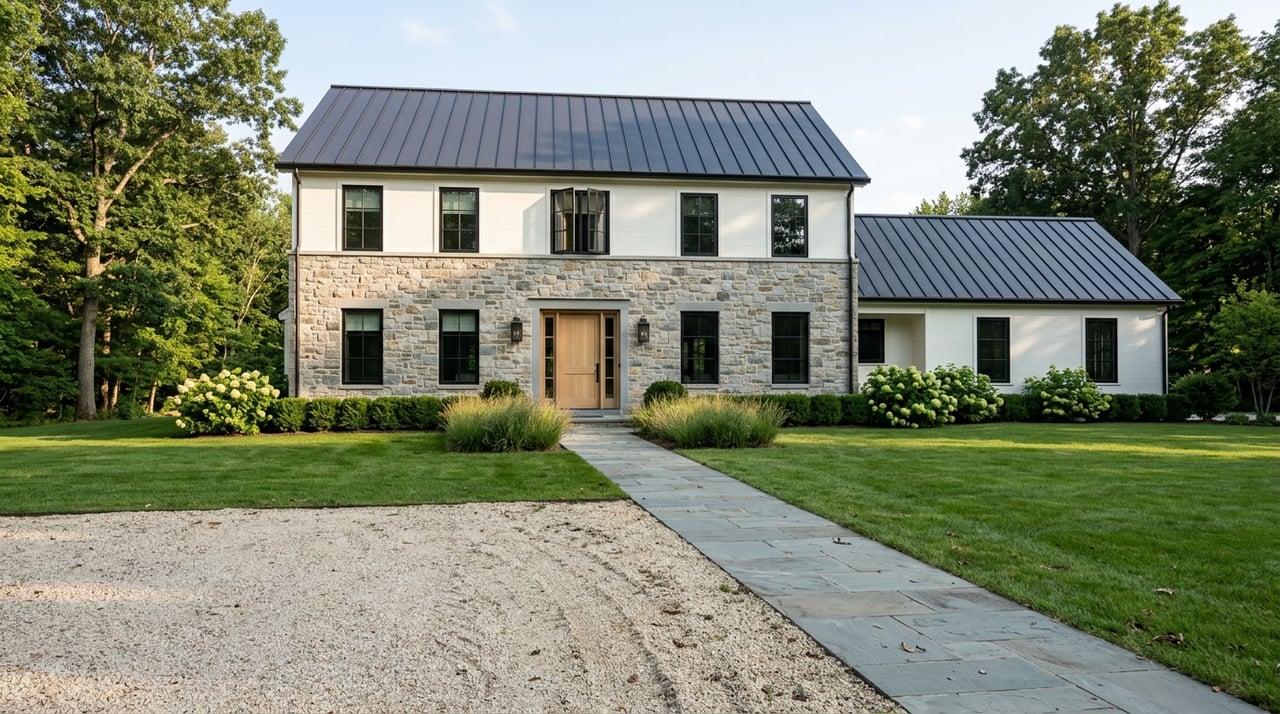
If you are planning to build in a historically sensitive area, a design that feels compatible with the setting will usually be easier to position than one that ignores local context. That does not mean every home must replicate an 18th-century farmhouse. It means scale, materials, rooflines, massing, and visual relationship to the streetscape or landscape may all matter.
The safest takeaway is simple: in some parts of Solebury, new construction is often expected to feel traditional and context-aware. If your project is more ambitious or highly customized, bringing in a design professional early can help you avoid costly redesigns later.
Start Due Diligence With Records
Before you spend too much time pricing finishes or sketching plans, start with the property record and map trail. Bucks County notes that deeds, mortgages, and subdivision plans are public records through the Recorder of Deeds and related property-record resources.
You will also want to verify the parcel on the township zoning map and identify whether any approvals, restrictions, or prior subdivision activity affect the lot. This early document review can reveal issues that are far easier to address before you are under pressure.
Confirm Access and Frontage Early
One of the easiest mistakes land buyers make is assuming road access is simple. Solebury’s code requires frontage on a compliant street for a principal building, and frontage standards can be just as important as lot area.
If the parcel fronts a state-maintained road, PennDOT may also be part of the access conversation. Solebury notes that several local roads are state maintained and directs owners to PennDOT roadwork information, which is a useful reminder that driveway and road access questions may involve more than township review.
Review Septic, Sewer, and Well Reality
Utilities are a major part of land feasibility in Solebury. The township states that only a small portion along Route 202 is connected to public sewer, while most wastewater is handled by septic systems, according to the Planning and Zoning FAQs.
That means many buyers should plan around on-site septic and private well considerations. The township also advises owners to work with a professional well contractor familiar with county and township ordinances, which is a practical step if you are evaluating a raw parcel or an older property slated for redevelopment.
Check Grading and Stormwater Requirements
Site work is another area where costs can expand quickly. Solebury states that grading permits are required for earth disturbance over 2,000 square feet, and those permits must be completed before a building permit is submitted.
The township also notes that permit review can take up to 45 days. If your lot needs driveway work, grading, drainage improvements, or stormwater management, those timelines and costs should be part of your budget from the start.
Screen Environmental Constraints
Environmental review is essential in Solebury because water, slopes, and natural-resource protections are central to how the township regulates land use. The township provides GIS resources and notes that it includes 10 watersheds or aquifers, while natural-resource standards apply setbacks from floodplains, wetlands, steep slopes, ponds, and lakes, as outlined in its watershed and water-issues information.
In plain terms, you want to know whether the lot has room for a home site outside restricted areas. A parcel with beautiful natural features can still be appealing, but those same features may shrink the area that is practical for construction.
Do Not Overlook Easements
Easements can permanently shape what you can and cannot do with a property. Solebury describes conservation easements as binding contracts that restrict use and development forever, often co-held by the township and a land trust.
That makes easement review one of the most important steps in land due diligence. Even if a parcel looks open and usable, the recorded restrictions may narrow future building options, location choices, or subdivision potential.
Understand the Review Process
For many buyers, the biggest surprise is how many moving parts can be involved before construction begins. Solebury’s Planning and Zoning materials note that some applications, including subdivision and land development, wells, grading and stormwater, floodplain matters, road occupancy, signs, and HARB applications, are not routed through the general permit portal.
That does not mean a parcel is not worth pursuing. It means your planning process should be realistic, organized, and supported by the right professionals at the right time.
Build the Right Advisory Team
In a market like Solebury, the smartest approach is usually a feasibility-first one. Before you commit, it helps to pre-screen what a parcel can likely support, compare likely development cost against end value, and decide whether the best fit is a custom build, long-term hold, or resale strategy.
That is where a knowledgeable real estate team can add value early. With experience across Bucks County land, homes, and valuation-sensitive transactions, the Lisa Povlow Team can help you filter opportunities, frame the right questions, and identify when to involve a surveyor, engineer, septic designer, title professional, attorney, appraiser, accountant, or other specialist.
A Smarter Way to Evaluate Solebury Land
If you are exploring land and new construction opportunities in Solebury, the goal is not simply to find an available parcel. It is to find one that supports your vision without hidden constraints derailing your budget or timeline.
With Solebury’s preservation priorities, district-specific zoning, and layered review process, clear upfront analysis matters. If you want a strategic, discreet conversation about a parcel, a custom-home plan, or the resale potential of land in the New Hope and Bucks County area, Lisa Povlow is here to help.
FAQs
What makes Solebury land different from other Bucks County land opportunities?
- Solebury is shaped by preservation priorities, natural-resource protections, historic context, and district-specific zoning, so buildability often depends on more than lot size alone.
What should you verify before buying land in Solebury?
- You should review deeds, subdivision plans, zoning, frontage, access, easements, septic and well considerations, grading needs, stormwater requirements, and environmental constraints before moving forward.
What zoning lot sizes apply to Solebury residential parcels?
- Minimum lot sizes vary by district, with examples ranging from 8,000 square feet in R-1 to 130,680 square feet for residential use in RB, based on the township’s dimensional standards.
What should you know about new construction in Solebury historic districts?
- In areas such as Carversville and Phillips Mill, visible exterior work may go through HARB review, and simple projects often take about two to three months, with more time recommended for larger projects.
What utilities should you expect when evaluating Solebury land?
- Only a small portion along Route 202 is connected to public sewer, so many parcels rely on private septic systems and wells, making utility feasibility a key part of due diligence.
Who can help you assess a Solebury parcel before you buy?
- A local real estate team with valuation and land experience can help you pre-screen a parcel, compare risk and opportunity, and guide you on when to bring in the right licensed professionals for technical conclusions.