

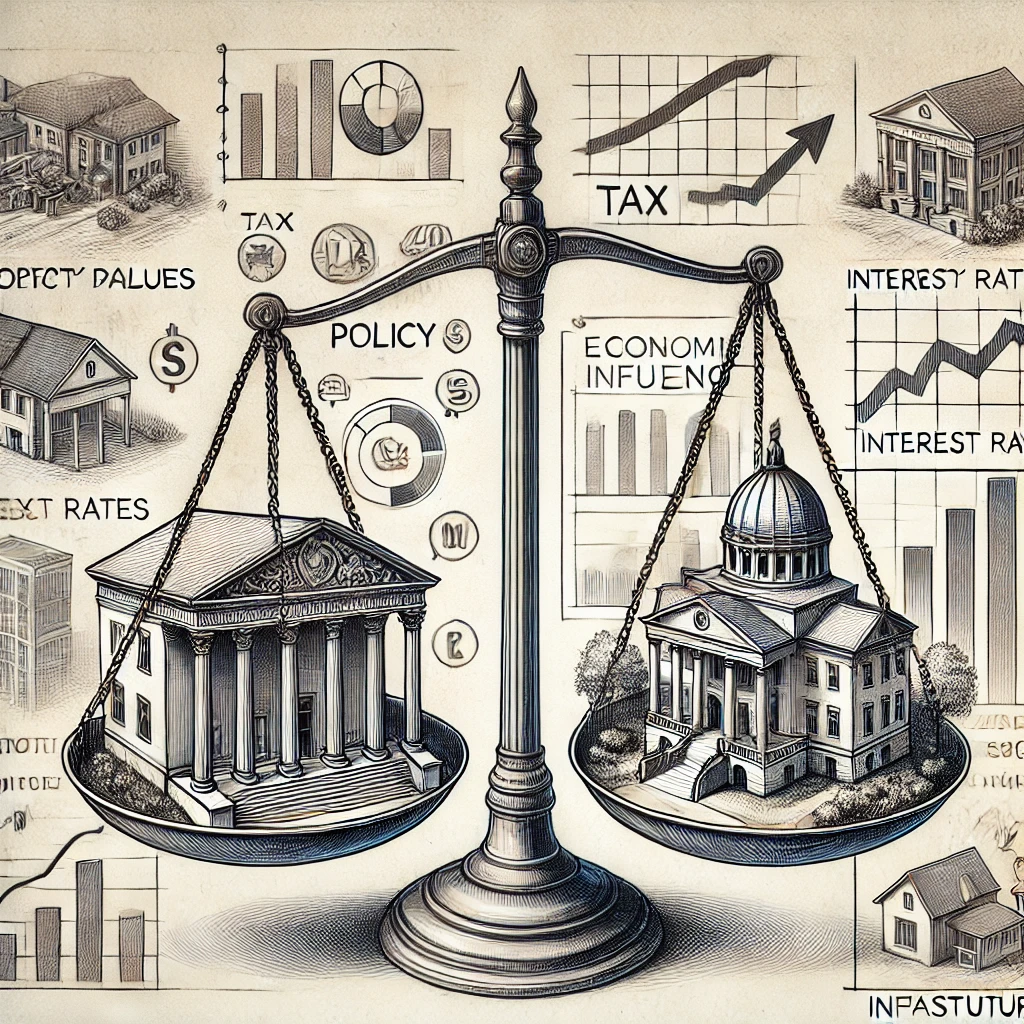
Politics and real estate are closely intertwined, with government policies and economic strategies significantly shaping the housing market. From tax policies to interest rates and zoning regulations, political decisions can have both short-term and long-term effects on property values, investment opportunities, and overall market stability. Understanding these impacts can help buyers, sellers, and investors make informed decisions.
1. Interest Rates and Monetary Policies
One of the most direct ways politics affects real estate is through monetary policy, particularly decisions made by central banks regarding interest rates. Lower interest rates generally make borrowing more affordable, increasing home purchases and demand for real estate. Conversely, higher interest rates can slow down the market by making mortgages more expensive. Political decisions regarding inflation control and economic growth often dictate these monetary policies.
2. Tax Policies and Incentives
Government policies on property taxes, capital gains taxes, and tax incentives can greatly impact real estate. Policies that offer tax breaks or credits for homebuyers can stimulate the housing market, whereas higher property taxes or reduced tax incentives may slow down investment in real estate. Political shifts in tax legislation can either encourage or discourage homeownership and real estate development.
3. Zoning and Land Use Regulations
Zoning laws and land use regulations are heavily influenced by local and national governments. Changes in zoning policies can either open up new areas for development or restrict real estate expansion. For instance, policies promoting high-density housing can lead to an increase in multi-family developments, while stricter zoning laws can limit housing supply and drive up property prices.
4. Housing Market Regulations
Regulatory measures such as rent control, affordable housing mandates, and eviction policies can shape the real estate landscape. While these regulations are often intended to protect tenants and promote affordability, they can also impact landlords and investors by influencing rental yields and property management strategies. The balance between tenant protection and property owner rights often depends on political leadership and policy priorities.
5. Infrastructure and Development Spending
Government spending on infrastructure—such as roads, public transportation, and utilities—can significantly impact property values. Areas with increased investment in infrastructure often experience rising real estate prices due to improved accessibility and amenities. Political decisions on infrastructure projects, such as new highways or public transit expansions, can reshape entire neighborhoods and create new investment opportunities.
6. Economic Policies and Market Stability
Broader economic policies, including trade agreements, employment programs, and business regulations, play a role in shaping the real estate market. A strong economy with job growth and rising wages typically leads to increased demand for housing. In contrast, economic downturns can result in declining home values and slower market activity. Political decisions regarding economic stimulus packages and employment policies can therefore directly impact the housing sector.
7. Foreign Investment Policies
Governments often regulate foreign investments in real estate, impacting market trends. Policies that encourage foreign investment can drive up property values, while restrictions on international buyers may stabilize or lower prices in certain regions. Political perspectives on foreign ownership of real estate can shift based on economic conditions and national priorities.
Final Thoughts
While political decisions are unavoidable in real estate, understanding their potential impact can help buyers, sellers, and investors navigate the market more effectively. By staying informed about policies affecting interest rates, taxation, zoning, and economic growth, individuals can make strategic decisions to protect and maximize their real estate investments. Whether on a local or national level, politics will always play a crucial role in shaping the real estate industry.