
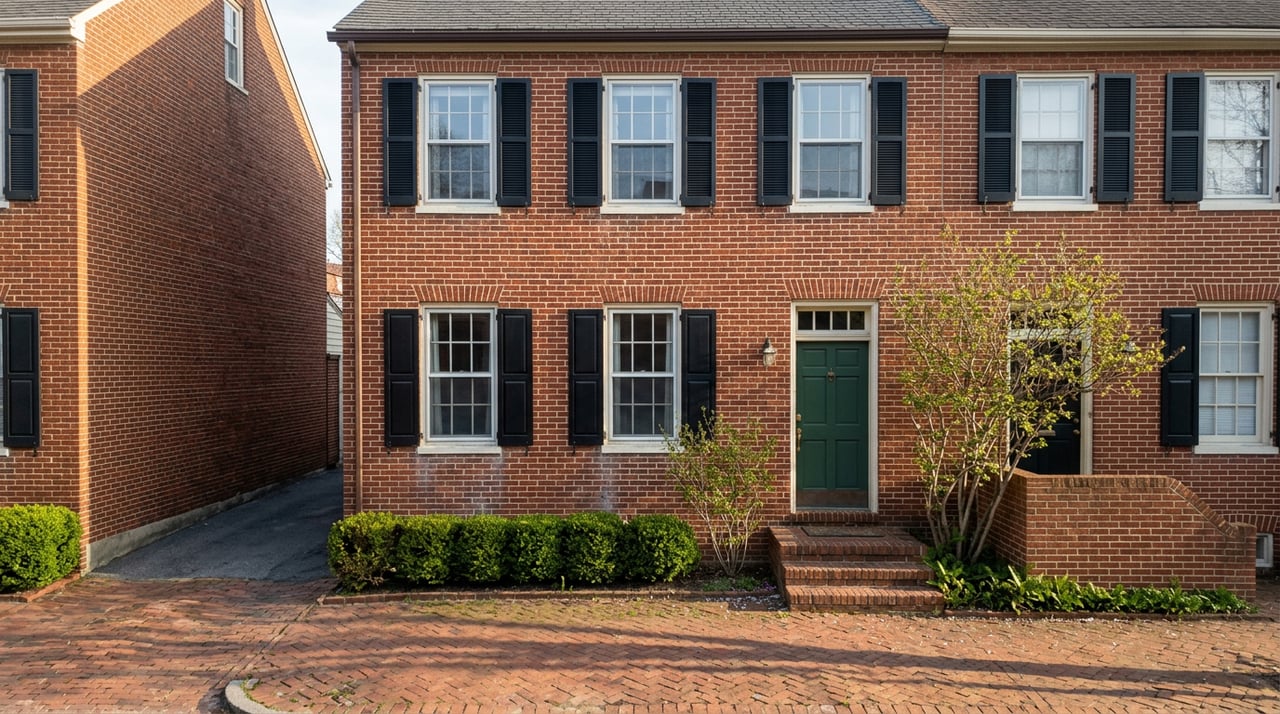
Two closings can happen on the same August morning, ten minutes apart, both listed as "Doylestown." One seller spent three weeks in July coordinating a municipal inspector's half-hour appointment window before the buyer's mortgage commitment came through. The other seller never heard from the municipality at all. Same name on the sign. Two entirely different pre-closing checklists.
That split is not a fluke of paperwork. It is the product of [Doylestown Borough's 1988 ordinance](https://ecode360.com/16051339) and the government next door never writing an equivalent one. If you are preparing to sell a home with a Doylestown address, the first question that matters is not what the market is doing. It is which Doylestown you actually live in.
Same Name, Different Rulebook
Doylestown Borough and Doylestown Township are separate municipal governments that happen to share a name and a border. Doylestown Borough chose to inspect. Doylestown Township did not write a matching rule into its own code or permitting pages.
That means a buyer comparing a listing on State Street to one a mile away in the Township is not just comparing square footage and lot size. They are comparing two different sets of pre-closing obligations, and only one of the sellers is required to hand over a government-issued certificate before anyone moves in.
What the 1988 Ordinance Actually Requires
Doylestown Borough's requirement traces to Ordinance 1988-1, adopted January 18, 1988, and amended by Ordinance 2017-1 on January 23, 2017. The rule is straightforward on its face: before a residential dwelling can change occupancy through a sale, the Borough inspects it against the Property Maintenance Code and issues an Occupancy Certificate confirming the home meets applicable Borough and Commonwealth requirements.
The Borough is careful to draw a line around what this inspection is not. In its own public notice explaining the requirement, the Borough states plainly that the inspection "is not meant to take the place of a private home inspection." It checks basic safety and maintenance compliance. It does not evaluate the roof's remaining life, the condition of the HVAC system, or anything a buyer's private inspector would flag in a standard due diligence report. Sellers who assume the municipal certificate covers the same ground as a home inspection are working from the wrong assumption, and that gap is exactly where surprises show up late in a transaction.
One exemption is worth knowing if you are selling as part of a foreclosure or loss-mitigation situation. The ordinance explicitly does not apply to transfers to a bank, savings association, credit union, or similar institution taking title to offset a defaulted loan.
Three Ways the Inspection Can End
The Borough's code lays out three possible outcomes once the inspection happens, and the difference between them shapes how quickly a buyer can move in.
| Outcome | What it means for the buyer |
|---|---|
| Occupancy Certificate | Property passed clean. Buyer can occupy immediately. |
| Temporary Occupancy Certificate | A violation exists but isn't substantial. Buyer can occupy while repairs are made. |
| Temporary Access Certificate | A substantial violation exists, one that makes the home "unfit for human habitation." No one may occupy until it's corrected. |
That third category is the one that catches sellers off guard. A substantial violation isn't a cosmetic issue. It's a condition serious enough that the Borough will not let anyone live in the home until it's fixed.
The Scheduling Detail That Trips Up Sellers
The Borough's own building department instructions include a detail that rarely makes it into a listing timeline: inspections must be scheduled at least 48 hours in advance, appointments run in half-hour windows, and the office explicitly tells callers not to leave a voicemail. If a delay pushes your slot back, someone has to call you directly during the appointed window to reschedule.
That is not a system built for last-minute requests. A seller who waits until an offer is accepted to think about the Occupancy Certificate is starting a scheduling process that runs on the Borough's calendar, not the buyer's mortgage timeline. Filing the application and getting the inspection scheduled before you go live on the market, or immediately after, removes one of the few variables in a Borough sale that the seller actually controls.
Ten Minutes Away, None of This Applies
Doylestown Township's own code and permitting pages describe building permits, zoning, and on-lot sewage requirements in detail. What they do not describe, anywhere a seller or agent would reasonably look, is a resale occupancy inspection tied to the sale of an existing home. The Township requires permits and inspections for new construction and for work that changes a structure, the same as most municipalities. It has not adopted anything resembling the Borough's 1988 ordinance for the resale of an already-occupied dwelling.
The practical result is that a Township seller can move from accepted offer to closing without a municipal inspector ever entering the picture, while a Borough seller a short drive away is legally required to have one. Doylestown's two governments made opposite choices.
What State Law Actually Guarantees You
Pennsylvania's Municipal Code and Ordinance Compliance Act governs what happens once a municipality decides to inspect at resale, not whether it has to inspect in the first place. Under that framework, as described by the Suburban REALTORS Alliance, a municipality that finds only minor violations issues a temporary certificate rather than blocking settlement outright, and once a reinspection confirms the remaining items are fixed, the final Use and Occupancy Certificate follows. Substantial violations are treated differently, since they trigger the Temporary Access Certificate process rather than a straightforward reinspection.
Doylestown Borough and Doylestown Township sit next to each other with opposite resale rules.
Building the Certificate Into Your Timeline
For a Borough seller, the practical sequence looks like this: apply for the Occupancy Certificate early, ideally before or immediately after listing rather than after an offer is signed. Budget for the 48-hour scheduling lead time and the half-hour appointment structure. Treat any repairs flagged by the inspection as separate from whatever a buyer's private inspector finds, since the two inspections are checking different things for different purposes. If the home has any condition that could plausibly be called a substantial violation, address it before the Borough ever sees the property, because a Temporary Access Certificate can hold up occupancy.
Frequently Asked Questions
Does the Occupancy Certificate requirement apply if I'm selling to a bank as part of a foreclosure? No. The ordinance specifically exempts transfers to a bank, savings association, credit union, or similar financial institution taking title to offset a defaulted loan.
Is the Borough's inspection the same as my buyer's private home inspection? No. The Borough states directly that its inspection is not meant to replace a private home inspection. It checks compliance with building, fire, and property maintenance codes. It does not evaluate mechanical systems, roof condition, or the kind of detail a private inspector's report typically covers.
What happens if the Borough's inspector finds something serious right before closing? If the violation is substantial enough to make the home "unfit for human habitation," the Borough issues a Temporary Access Certificate instead of an Occupancy Certificate. No one may occupy the home until the violation is corrected
If you're weighing a sale in Doylestown Borough, Doylestown Township, or anywhere else across Bucks County where the rules change from one address to the next, we'd rather walk you through the specific ordinance that applies to your property before you list than have you discover it during attorney review. The Lisa Povlow Team has spent years tracking exactly this kind of municipal detail. Schedule a private consultation and we'll tell you what your address actually requires.
This article is general information, not legal, tax or financial advice. Consult a qualified professional about your situation.