
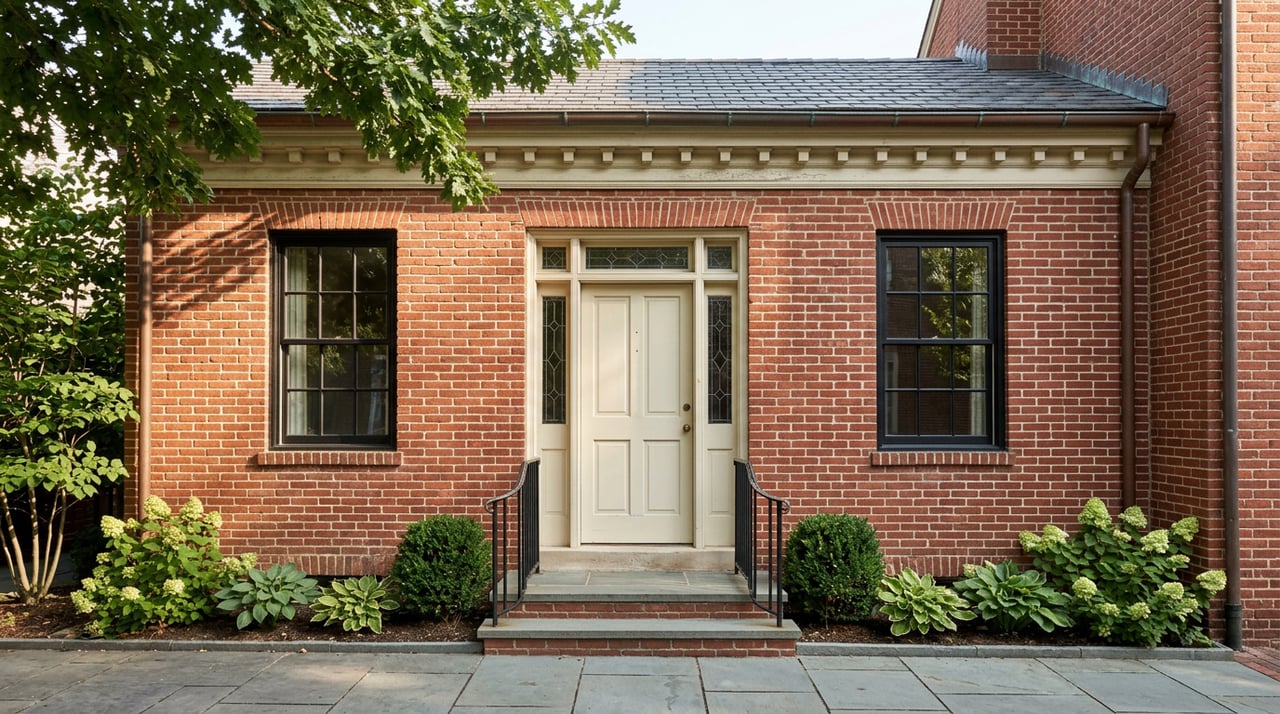
A house at 265 Paine Street came on the market this year for the first time in more than 45 years. It was designed and built in 1929 by A. Oscar Martin, the architect behind the Mercer Museum's addition and much of downtown Doylestown's built character across four decades of practice. Two generations of the Martin family lived in it before it ever reached a listing sheet. Homes like this don't behave like the rest of the Doylestown market, and the current numbers show exactly how far apart the two markets have drifted.
If you've searched "Doylestown home prices" this summer, you've seen a single median number, probably somewhere in the $800Ks depending on the portal and the month. That number is real, but it's an average of two markets that move at different speeds, sell at different price points per square foot, and answer to different kinds of buyers. Knowing which one you're actually shopping, or pricing, changes what the number should mean to you.
One Median, Two Markets
Doylestown Borough's historic core, tracked separately at the neighborhood level, sold for a median of $1.1 million over the three months ending March 2026, up 7.4 percent from the same period a year earlier. That works out to roughly $480 per square foot. Homes in that pocket averaged 80 days on market, up from 70 days the year before. Only 6 homes sold there in March 2026, up from 3 the prior year, which tells you how thin that slice of inventory really is.
Compare that to the citywide figure. As of August 2026, Doylestown homes carried a median list price of $863K at roughly $304 per square foot, moving in a median of 32 days, an 8 percent drop from the same month a year earlier. Back in February 2026, the citywide median days on market stood at 39. In other words, the broader market sped up across 2026 while the historic core slowed down over the same stretch.
| Market slice | Price | Price per sq ft | Days on market | Data window |
|---|---|---|---|---|
| Doylestown Historic District | $1.1M median sale (+7.4% YoY) | ~$480 | 80 (up from 70) | 3 months ending March 2026 |
| Doylestown, all homes | $863K median list | ~$304 | 32 (down 8% YoY) | August 2026 |
| Bucks County, all municipalities | $500K median sold | — | 33 (14% above 5-yr Jan average of 29) | January 2026 |
Zoom out to the county level and a third data point confirms the pattern. Bucks County's median sold price came in at $500,000 in January 2026, with homes averaging 33 days on market, itself 14 percent above the five-year January average of 29 days. Even a countywide market running a little slower than normal doesn't come close to what's happening inside Doylestown's historic core.
Why the Priciest Pocket Is Also the Slowest
A market where price per square foot barely moved (it actually slipped 0.4 percent) while total sale price jumped 7.4 percent is telling you something specific: the mix of homes selling shifted toward larger or more distinctive properties, not that the same size house got pricier. Combine that with only a handful of transactions each month and you get a market driven by whichever few architecturally significant houses happen to change hands, not by broad competitive bidding across a deep pool of similar listings.
That's consistent with what 265 Paine Street represents. Houses with a documented architect, a multi-generational ownership history, and features tied to the borough's built heritage don't turn over often, and when they do, they draw a specific kind of buyer willing to wait for the right one rather than settle for the next available comparable. That patience shows up as days on market. It's not a sign of a soft market. It's a sign of a narrow one.
The Bucks County Association of Realtors described the broader county market this way in its January 2026 report:
"Buyers are benefiting from slightly more time and choice, while sellers continue to see strong home values and steady demand."
That framing fits the historic core almost better than it fits the county as a whole. Buyers there are getting real time to evaluate a genuinely limited set of options, and sellers are still seeing values climb, just not on a predictable monthly cycle the way production housing tends to run.
What's Making the Rest of Doylestown Move Faster
The other side of Doylestown's blended median is doing the opposite work. Newer townhome communities inside the borough and township, including Doylestown Station and the Doylestown Hunt community, plus semi-custom new construction from builders like Foxlane Homes, add supply that's move-in ready, consistently sized, and easy to comp against recent sales down the street. That kind of inventory turns over on a normal residential clock because buyers can measure it directly against several similar homes that sold in the last quarter.
That contrast, a handful of one-of-a-kind historic sales moving slowly against a steadier current of newer product moving quickly, is what produces a citywide median that doesn't describe either market particularly well. The Bucks County Association of Realtors' June 2026 update noted that even the broader market took a bit longer to sell than the typical June pace, with inventory staying tight even as buyer activity held up. If the county-wide market was already running slightly slow that month, the historic core's 80-day average is running at more than double that already-slower-than-normal pace.
What This Means If You're Pricing or Shopping in Doylestown
- If you're pricing a historic-district listing, comping it against the citywide median will understate what buyers have actually paid for comparable architecture and overstate how fast it should move. Use the district's own recent sales, thin as that list may be.
- If you're a buyer using portal search results to set expectations, recognize that a "Doylestown" search blends the borough's oldest housing stock with its newest. The home you're picturing and the home the median describes may not be the same product.
- If you're weighing whether 80 days on market signals a problem with a specific historic listing, check the district's typical pace first. A property sitting for eleven or twelve weeks in that pocket is closer to normal than it would be in a townhome community built in the last five years.
- If an appraisal is part of your transaction, remember that comparable sales get harder to find the more unusual the home. A property with three sales to measure it against in the district calls for a different approach than one with fifteen recent closings in a production community nearby.
Frequently Asked Questions
Does a longer time on market in the Historic District mean sellers should expect to cut price? Not automatically. The district's median sale price rose 7.4 percent over the three months ending March 2026 even as days on market climbed. Slower absorption in a market with only a handful of monthly sales reflects thin supply and a narrow buyer pool, not weak demand.
How should I compare "Doylestown" listings across different portals? Look past the citywide number to the specific pocket. A listing in the historic core and a new townhome a mile away are answering different questions about price and pace, even when a search engine groups them under the same city name.
If you're weighing a purchase or a listing in Doylestown's historic core, or trying to figure out where your own property sits between these two markets, the Lisa Povlow Team can walk through the specific comparable sales that actually apply to your address. Schedule a private consultation to start with the numbers that matter for your situation, not the blended ones.